Why Your Dermatologist Stays Quiet About Viral Skincare Trends—And the Rare Times They Don't
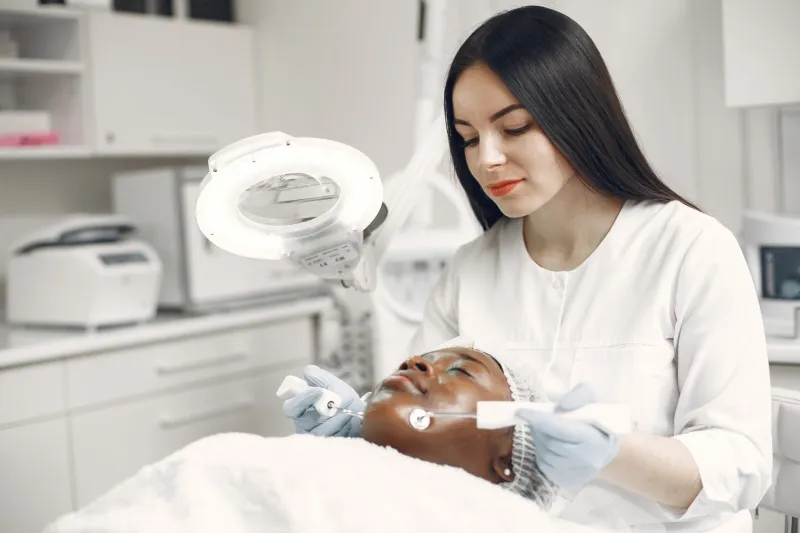
Every few weeks, a new skincare trend detonates across TikTok or Instagram. Slugging, skin cycling, sunscreen contouring, chlorophyll drops, beef tallow moisturizers—the list grows faster than most people can keep up with. By the time a clip accumulates ten million views, a portion of those viewers have already ordered the featured product. And yet, if you walk into a dermatology clinic and ask your physician about the latest viral routine, the response is frequently measured, cautious, or even diplomatically evasive.
That restraint is not dismissiveness. It reflects something fundamental about how medical professionals are trained to evaluate evidence—and understanding that distinction can make you a significantly more informed consumer of skincare advice.
The Evidence Gap: Why Clinical Time Moves Differently Than Social Media Time
Dermatology, like all branches of medicine, operates within a framework of peer-reviewed research. Before a treatment or ingredient earns a physician's endorsement, it typically needs to demonstrate safety and efficacy through controlled studies, ideally randomized and double-blinded, conducted on adequately sized patient populations. That process takes years, sometimes decades.
TikTok operates on a 72-hour cycle.
When a creator posts a before-and-after video showing dramatic skin transformation after two weeks of a new routine, the visual evidence feels compelling. But dermatologists are trained to ask questions that a short-form video cannot answer: Was there a control group? Could the improvement be attributed to seasonal changes, stress reduction, or a concurrent medication? Was the lighting and filter identical in both images? What is the mechanism of action, and does it hold up under scrutiny?
The absence of those answers is not a reason to assume a trend is harmful. It is, however, a reason to withhold a professional recommendation.
Specific Trends Under the Clinical Lens
Slugging
Among viral trends, slugging—the practice of applying an occlusive layer of petroleum jelly as the final step in a nighttime routine—has received perhaps the most nuanced reception from dermatologists. Petroleum jelly (petrolatum) is a well-studied ingredient with a long safety record. It does not moisturize skin directly but forms a physical barrier that significantly reduces transepidermal water loss.
For patients with compromised skin barriers, xerosis, or mild eczema, occlusive therapy is a legitimate clinical tool. Where dermatologists urge caution is in its indiscriminate application: individuals with acne-prone or congestion-prone skin may find that heavy occlusives worsen comedones. The trend itself is not wrong; the universal application of it is where the clinical nuance gets lost.
Skin Cycling
Skin cycling—a structured rotation of actives (typically retinoids and exfoliants) followed by recovery nights—gained enormous traction largely because it was promoted by a board-certified dermatologist. That origin matters. The underlying principle, that skin benefits from periods of active treatment alternated with barrier-supportive recovery, aligns with how many clinicians already counsel patients on retinoid introduction.
This is one of the rare cases where a viral trend arrived with a legitimate clinical rationale attached. Dermatologists who were initially skeptical of the format have generally acknowledged that the core principle is sound, even if the specific four-night schedule does not constitute a universal prescription.
Sunscreen Contouring
This trend—deliberately applying SPF only to certain facial zones to achieve a natural tan contour—is one that dermatologists have responded to with near-uniform opposition. Intentional UV exposure to unprotected skin, regardless of the aesthetic motivation, carries documented risks: photoaging, hyperpigmentation, and cumulative carcinogenic exposure. There is no clinical context in which this practice is advisable, and it represents precisely the category of viral trend that physicians feel obligated to address directly.
Beef Tallow as Moisturizer
The resurgence of rendered animal fat as a skincare product has been framed online as a return to ancestral, chemical-free beauty. Dermatologists approach this trend with a combination of curiosity and caution. Tallow does contain fatty acids, including oleic acid, that are present in the skin's natural lipid matrix. However, the evidence base is essentially nonexistent by clinical standards, manufacturing and purity controls vary widely among small-batch producers, and the comedogenicity profile for acne-prone individuals has not been rigorously studied. It is not categorically dangerous, but it is not clinically endorsed either.
The Framework: How to Evaluate the Next Trend Before It Reaches Your Skin
Rather than waiting for a dermatologist to weigh in on each emerging trend—a process that will always lag behind the speed of social media—consider applying a structured set of questions to any new skincare claim.
Ask who is promoting it. A board-certified dermatologist or cosmetic chemist carries different credibility than an influencer with no stated credentials. This does not mean non-clinicians are always wrong, but the source shapes how much independent verification you should seek.
Ask what the proposed mechanism is. Does the trend claim to work through a plausible biological pathway? Ingredients like niacinamide, retinoids, and azelaic acid have well-documented mechanisms. "Detoxifying" the skin or "resetting" cellular memory are phrases that should prompt skepticism.
Ask whether the evidence is anecdotal or controlled. Before-and-after photos, testimonials, and personal narratives are not clinical evidence. They can be a starting point for curiosity, but they should not be the endpoint of your research.
Ask about your specific skin context. Even clinically validated ingredients are not universally appropriate. Retinoids are not suitable for pregnant patients. Strong chemical exfoliants can worsen certain inflammatory conditions. A trend that works beautifully for one skin type may be actively counterproductive for another.
When Dermatologists Do Engage With Trends
It would be inaccurate to characterize all physicians as reflexively opposed to popular skincare culture. Several ingredients now considered clinical staples—niacinamide, hyaluronic acid, and centella asiatica among them—experienced periods of significant consumer enthusiasm before accumulating robust research support. Dermatologists who monitored that research and incorporated those ingredients into treatment recommendations were not capitulating to trends; they were following evidence that happened to align with popular interest.
The distinction lies in the direction of causality. A dermatologist who recommends an ingredient because the research supports it—regardless of whether that ingredient is trending—is practicing evidence-based medicine. The concern arises when popularity itself becomes the justification.
A Closing Note on Productive Skepticism
The goal is not to dismiss social media as a source of skincare information. Platforms like TikTok have genuinely democratized access to dermatological concepts, introduced patients to ingredients they might never have encountered, and occasionally surfaced trends with real clinical merit. The goal is to hold those claims to the same standard of scrutiny that a physician would apply—asking not just whether something appears to work, but why, for whom, and under what conditions.
Your dermatologist's hesitation is not indifference. It is, in most cases, the appropriate application of a professional standard that has your long-term skin health as its primary concern.