When Skin Conditions Wear Each Other's Faces: The Clinical Art of Telling Acne, Rosacea, and Eczema Apart

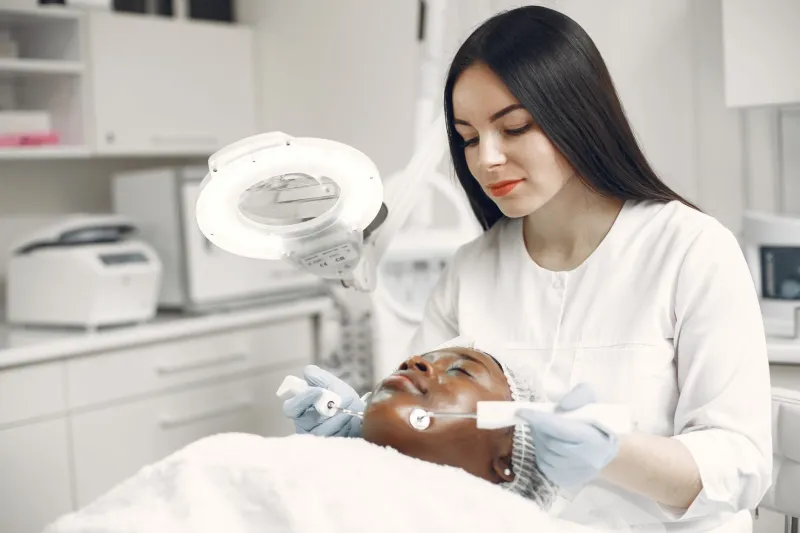
Photo by Photo by Krycheck Cre on Unsplash on Unsplash
Skin rarely announces itself in clear, unambiguous terms. A red, inflamed cheek could belong to a college student with hormonal acne, a 40-year-old professional with rosacea, or a child whose eczema has migrated to an unexpected location. The visual overlap between these three conditions is not a curiosity—it is a genuine clinical challenge that dermatologists navigate daily, and one that carries real consequences when navigated incorrectly.
Patients who self-diagnose and self-treat based on internet images, or who receive an incomplete assessment from a non-specialist, may spend months or years applying the wrong products. Salicylic acid on a rosacea flare. Steroid creams on cystic acne. Retinoids on an eczematous skin barrier that cannot tolerate them. Each of these missteps is understandable given the conditions' surface similarities—and each has the potential to make the underlying problem considerably worse.
Why These Three Conditions Overlap Visually
Acne, rosacea, and atopic dermatitis (the most common form of eczema) are all inflammatory skin conditions, and inflammation has a limited visual vocabulary. Redness, swelling, papules, and textural disruption appear across all three. On photographs—the medium through which most Americans now evaluate their own skin—the distinctions become even more compressed.
The skin's inflammatory response does not differentiate itself based on the underlying trigger. Whether the cause is a Cutibacterium acnes colonization in a hair follicle, a dysregulated neurovascular response in the dermis, or a compromised barrier reacting to an environmental allergen, the outward presentation can look strikingly similar to an untrained eye.
This is why dermatologists rarely rely on a single visual cue. Diagnosis is a composite process—pattern recognition informed by location, distribution, patient history, symptom timeline, triggers, and physical examination findings that no photograph can fully convey.
Acne: More Than Just Pimples
The defining feature of acne vulgaris is the comedone—the blocked follicular unit that precedes inflammatory lesions. Open comedones (blackheads) and closed comedones (whiteheads) are the architectural foundation of an acne presentation, even when they are not the most visually prominent feature. Their presence is one of the first things a dermatologist looks for when a patient presents with facial inflammation.
Acne also tends to follow sebaceous gland density. The T-zone, chest, upper back, and shoulders are common sites because these areas have the highest concentration of oil-producing glands. While acne can certainly appear on the cheeks, a presentation that is heavily concentrated on the central face—particularly the nose and cheeks—without comedones warrants a closer look for rosacea.
Hormonal acne, which disproportionately affects adult women in the US, clusters along the jawline and lower face, often worsening predictably in the week before menstruation. This cyclical pattern is a meaningful diagnostic data point that distinguishes it from both rosacea and eczema.
Rosacea: The Condition Most Frequently Mistaken for Something Else
Rosacea is chronic, progressive, and profoundly misunderstood—both by patients and, occasionally, by clinicians outside the specialty. Its subtypes vary considerably in presentation. Erythematotelangiectatic rosacea is characterized primarily by persistent central facial redness and visible blood vessels. Papulopustular rosacea, the subtype most likely to be confused with acne, produces inflammatory papules and pustules—but critically, without the comedones that define acne.
The absence of blackheads and whiteheads in a patient presenting with facial pustules is one of the most reliable differentiating signals a dermatologist uses. Other hallmarks include flushing triggered by heat, alcohol, spicy foods, emotional stress, or sun exposure; a sensation of burning or stinging rather than the tenderness associated with acne nodules; and a patient demographic that skews toward fair-skinned adults over 30.
The diagnostic danger zone for rosacea is that many of its triggers—heat, stress, certain foods—are also known to exacerbate acne in susceptible individuals. This overlap in trigger profiles, combined with similar-looking inflammatory lesions, creates fertile ground for misdiagnosis. Applying acne treatments containing benzoyl peroxide or high-concentration salicylic acid to rosacea-prone skin can strip an already reactive skin barrier and intensify flushing, leading the patient to conclude their condition is worsening and their diagnosis must be wrong—when in fact the diagnosis was wrong from the beginning.
Eczema: The Shape-Shifter
Atopic dermatitis is perhaps the most behaviorally complex of the three conditions because it is not a fixed presentation—it is a dynamic, relapsing-remitting disease influenced by immune function, environmental exposure, genetics, and barrier integrity. In infants, it typically appears on the cheeks and scalp. In older children and adults, it migrates toward the flexural creases: the inner elbows, behind the knees, and the neck. But it does not always follow these rules.
When eczema presents on the face in adults, it can produce the kind of red, textured, inflamed patches that prompt patients to reach for acne treatments. The critical distinctions include intense itch (pruritus is the cardinal symptom of eczema and is generally less prominent in acne or rosacea), dry and thickened skin texture rather than oiliness, and a personal or family history of atopy—the triad of eczema, allergic rhinitis, and asthma that frequently runs together.
Contact dermatitis, a related but distinct condition, deserves mention here because it is frequently mistaken for all three of the above. A patient who develops facial redness and inflammation after introducing a new cleanser, sunscreen, or makeup product may be experiencing an allergic or irritant contact reaction rather than a primary skin condition. The timeline—onset correlated with a new product—is a key diagnostic clue that dermatologists actively probe during a patient history.
Why At-Home Assessment Falls Short
The internet has made patients more informed and more confused in equal measure. Skin condition quizzes, symptom checkers, and before-and-after photographs provide a framework that feels diagnostic but is fundamentally incomplete. They cannot account for the tactile quality of a lesion, the distribution pattern across the full body, the patient's personal and family medical history, or the subtle clinical signs—telangiectasia, lichenification, follicular plugging—that require trained eyes and, often, a dermatoscope.
More consequentially, at-home assessment cannot account for comorbidity. Patients can have rosacea and eczema simultaneously. Acne can coexist with seborrheic dermatitis, which itself produces redness and flaking that mimics both rosacea and eczema in certain presentations. The presence of one condition does not exclude another, and treating only the most visible layer of a complex presentation will always produce incomplete results.
The Diagnostic Conversation Your Dermatologist Is Having With You
When a dermatologist asks about your diet, your stress levels, your family history, your laundry detergent, and the full inventory of products you apply to your face, they are not making small talk. Each question is a diagnostic instrument. The answers collectively build a clinical picture that no visual examination alone can produce.
Patients who arrive at an appointment with a detailed account of their symptom history—when it started, what makes it better or worse, what treatments they have already tried and how their skin responded—give their dermatologist a significant diagnostic advantage. This information transforms a brief clinical encounter into a meaningful investigative process.
Accurate diagnosis is not a preliminary step before treatment begins. It is the treatment, in the most fundamental sense. When the correct condition is identified, the entire therapeutic pathway becomes coherent—and the results that seemed impossible under months of incorrect treatment often materialize within weeks of the right one.