The Science of Layering: How to Combine Peptides, Niacinamide, and Hyaluronic Acid Without Undermining Your Routine
Why Ingredient Interactions Matter More Than Individual Actives
The skincare conversation in the United States has become increasingly sophisticated. Consumers are no longer simply reaching for a moisturizer; they are researching serums by active concentration, cross-referencing clinical abstracts, and assembling multi-step routines with the precision of a pharmacist. Yet one critical variable is often underestimated: how ingredients behave when they encounter one another on the skin.
A product that performs admirably on its own may be rendered partially ineffective by the formula applied immediately before it. Alternatively, two well-chosen actives applied in sequence can produce outcomes neither would achieve independently. For anyone investing time and money into a skincare regimen, understanding these dynamics is not optional—it is foundational.
This guide focuses specifically on three ingredients that appear in a substantial portion of the evidence-based routines dermatologists currently recommend: peptides, niacinamide, and hyaluronic acid. Each has a compelling individual profile. Together, their interactions range from synergistic to potentially counterproductive, depending on context.
Understanding Each Ingredient on Its Own Terms
Before examining interactions, it is worth establishing what each of these actives does and why it has earned a place in dermatologically informed routines.
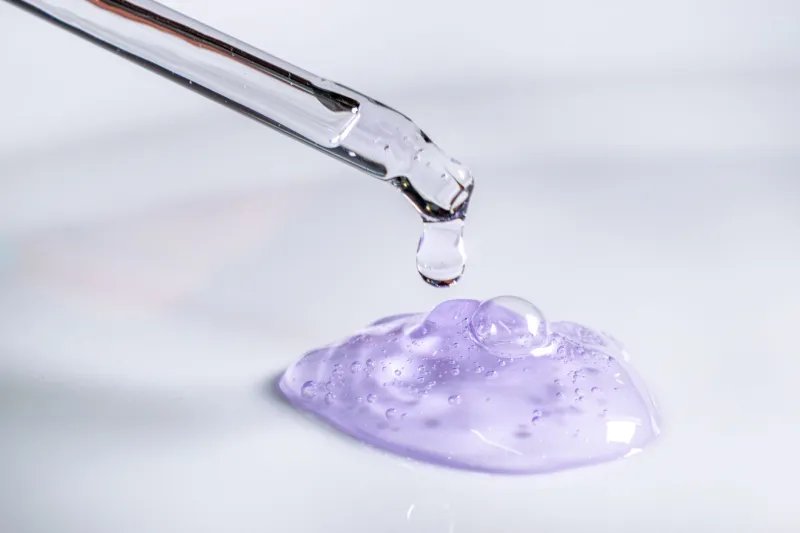
Hyaluronic acid (HA) is a humectant—a molecule that attracts and retains water. It is naturally present in the skin's extracellular matrix and diminishes with age. Topical HA draws moisture from the environment and from deeper skin layers toward the surface, temporarily improving the appearance of hydration and plumpness. Its efficacy is significantly influenced by molecular weight: lower molecular weight HA penetrates more deeply, while higher molecular weight forms create a surface film that reduces transepidermal water loss.
Niacinamide, a form of vitamin B3, is one of the most versatile and well-researched topical actives available. Clinical studies have documented its capacity to strengthen the skin barrier by increasing ceramide synthesis, reduce the appearance of hyperpigmentation by inhibiting melanosome transfer, minimize pore visibility, regulate sebum production, and provide anti-inflammatory effects. It is water-soluble, stable across a wide pH range, and generally well-tolerated even by sensitive skin types.
Peptides are short chains of amino acids that serve as signaling molecules within the skin. Depending on their sequence and structure, different peptides can stimulate collagen synthesis (signal peptides), inhibit muscle contraction to reduce expression lines (neurotransmitter-inhibiting peptides), or carry trace minerals into the skin to support enzymatic processes (carrier peptides). Because peptides are large, complex molecules, their penetration through the stratum corneum is a subject of ongoing research, and formulation quality plays a significant role in their real-world efficacy.
Combinations That Dermatologists Endorse
Niacinamide and hyaluronic acid represent one of the most straightforward and clinically sensible pairings in contemporary skincare. The two actives operate through entirely different mechanisms—one modulating cellular behavior and barrier function, the other addressing surface and near-surface hydration—without competing for the same pathways or receptors. Their pH compatibility is also favorable; both are stable across a broad range and neither requires an acidic environment to function. Applying a hyaluronic acid serum followed by a niacinamide-containing product (or vice versa) is well-supported and unlikely to compromise either ingredient's performance.
Peptides and niacinamide are similarly compatible. Niacinamide's anti-inflammatory properties may actually create a more favorable skin environment for peptide activity by reducing baseline irritation and supporting barrier integrity—conditions under which signaling peptides tend to perform more effectively. There is no documented chemical antagonism between these two actives, and several commercial formulations combine them deliberately for this reason.
Peptides and hyaluronic acid are a natural pairing in anti-aging formulations. HA's hydrating effect temporarily improves the skin's surface texture and creates a more receptive environment for peptide delivery by maintaining the hydration gradient that supports passive diffusion. Many dermatologist-recommended serums combine both, and the evidence for this pairing's tolerability is robust.
Where the Chemistry Gets Complicated
Not all combinations involving these three actives are equally straightforward—particularly when additional ingredients enter the picture.
Niacinamide and vitamin C is perhaps the most debated pairing in skincare chemistry. The concern originates from older in vitro research suggesting that niacinamide and ascorbic acid (the active form of vitamin C) can form a yellow compound called nicotinic acid when combined, potentially reducing the efficacy of vitamin C and causing skin discoloration. More recent analysis suggests this reaction requires sustained high temperatures unlikely to occur in normal storage conditions, and that the interaction is less clinically significant than once believed. That said, many dermatologists still recommend applying vitamin C and niacinamide at separate times of day as a precautionary measure—particularly for individuals using high-concentration vitamin C formulations.
Peptides and direct acids represent a more substantive compatibility issue. Alpha-hydroxy acids (AHAs) such as glycolic and lactic acid, as well as beta-hydroxy acids like salicylic acid, function optimally at a low pH—typically between 3.0 and 4.0. At this acidity, peptide bonds can hydrolyze, meaning the peptide chains break apart before they have the opportunity to reach their target receptors. Applying an AHA exfoliant immediately before or after a peptide serum is therefore counterproductive. The standard recommendation is to use acid exfoliants at a different time of day than peptides, or to allow adequate time between applications to permit pH normalization.
Hyaluronic acid in low-humidity environments is a nuance rather than a true ingredient conflict, but it is worth addressing because it affects the performance of any routine in which HA appears. In very dry climates or during winter months in states like Colorado, Montana, or the upper Midwest, HA can draw moisture from the deeper layers of the skin rather than from the atmosphere when ambient humidity is insufficient. This can paradoxically worsen surface dryness. The solution is to apply HA to damp skin and seal it with an occlusive or emollient moisturizer to lock in the moisture it has attracted.
A Practical Framework for Layering These Actives
For those looking to incorporate all three ingredients without inadvertently undermining their routine, the following sequencing principles are grounded in clinical logic.
Morning routine: Apply hyaluronic acid to damp skin as a first serum step. Follow with a niacinamide serum or a formula that combines niacinamide with peptides. Seal with a moisturizer and broad-spectrum SPF. This sequence takes advantage of HA's hydrating foundation, niacinamide's barrier-reinforcing properties, and peptides' signaling activity—all without introducing pH conflicts.
Evening routine: If acid exfoliants are part of your regimen, reserve them for the evening and apply them before any other actives. Wait at least 20 to 30 minutes before applying peptide-containing products to allow the skin's pH to return toward its normal slightly acidic range (approximately 4.5 to 5.5). Niacinamide and HA can be layered after peptides without concern.
Avoid overloading a single routine session. The instinct to apply every beneficial active at once is understandable but counterproductive. Skin has a finite capacity to absorb and process topical agents, and excessive layering can compromise the absorption of individual ingredients while increasing the risk of irritation. A well-curated routine of three to five products applied consistently will outperform a ten-step regimen assembled without regard for interaction.
The Role of Formulation Quality
One variable that individual ingredient lists cannot capture is formulation quality. The vehicle—the base in which an active is delivered—significantly affects how well it penetrates, how stable it remains, and how it interacts with adjacent products. A peptide serum formulated in a silicone-heavy base may actually impede the absorption of a water-based HA serum applied afterward. A niacinamide product formulated at an inappropriate pH may cause flushing even at low concentrations.
When in doubt, consulting a board-certified dermatologist or a licensed esthetician with clinical training is the most reliable path to a routine that is not only theoretically sound but practically effective for your specific skin.