Why Your Skin Behaves Differently at the Dermatologist's Office Than It Does at Home
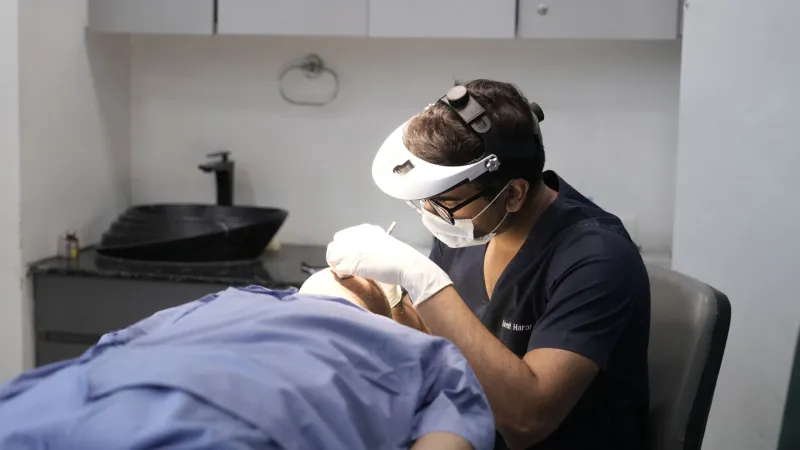
You leave your dermatologist's office feeling genuinely optimistic. Your skin looked clearer under the examination light, the texture seemed smoother after the provider applied a treatment, and the redness you have been battling for months appeared almost undetectable. Then you get home, glance in the bathroom mirror, and wonder whether you imagined the whole thing.
This experience is far more common than patients realize, and it has a clinical explanation. The dermatologist's office is, in many respects, a controlled environment engineered for precision—not a neutral space that reflects how your skin exists in the real world. The differences you observe are not a product of wishful thinking or poor memory. They are the consequence of lighting physics, application expertise, product formulation, and environmental conditions that diverge significantly from your daily circumstances.
Understanding these variables does more than explain the frustration. It provides a practical roadmap for narrowing the gap between what you see in the clinic and what greets you every morning.
The Role of Clinical Lighting in Skin Perception
Dermatology clinics use specialized lighting systems that are calibrated for diagnostic accuracy, not for flattery or ordinary visibility. Examination lights—particularly those designed for skin assessment—are often positioned at specific angles to reveal texture, pigmentation, and vascular activity with maximum clarity. Paradoxically, this same precision can make certain conditions appear more controlled under clinical observation than they do under the directional, often harsh lighting typical of American bathrooms.
Most residential bathrooms rely on overhead fixtures or side-mounted vanity lights that cast shadows downward or across the face, emphasizing surface texture, pore visibility, and uneven tone. Clinical lighting, by contrast, is frequently diffused and positioned to minimize shadow formation while maximizing color accuracy. The result is that conditions such as mild erythema, early hyperpigmentation, and fine textural irregularities may register differently—sometimes less severely—under medical-grade illumination.
This is not a conspiracy of flattery. Dermatologists require accurate lighting to assess conditions properly. But it does mean that the visual impression you carry home from an appointment may reflect a genuinely different optical environment rather than a different state of your skin.
Professional Application Technique Changes What You See
When a dermatologist or licensed aesthetician applies a product or performs a procedure during your visit, the technique involved is rarely replicable without training and practice. Professional application of topical treatments accounts for precise quantity, even distribution, appropriate pressure, and deliberate sequencing. These factors affect not only how a product performs but how the skin appears immediately afterward.
Consider something as seemingly simple as applying a hydrating serum or a post-procedure barrier cream. A trained provider knows exactly how much product creates optimal occlusion without pilling, how to press rather than drag across sensitized skin, and how to layer complementary formulations so that each one absorbs correctly. When patients attempt to replicate these steps at home using intuition rather than technique, the outcomes frequently diverge—not because the products are ineffective, but because the application method is materially different.
This is particularly relevant for patients managing conditions like acne, rosacea, or post-inflammatory hyperpigmentation, where product overuse or incorrect layering can actively worsen presentation. Your dermatologist's hands are, in a real sense, part of the treatment.
Product Freshness and Formulation Integrity
Clinic-dispensed or clinic-applied products are typically stored under conditions that preserve their active ingredients—controlled temperature, minimal light exposure, and sealed packaging until the moment of use. Many active compounds, including retinoids, vitamin C derivatives, and certain peptides, are sensitive to oxidation, heat, and repeated exposure to air. In a clinical setting, these variables are managed as a matter of protocol.
At home, the same products may sit on a bathroom shelf exposed to steam from the shower, temperature fluctuations from the HVAC system, and repeated opening that introduces air into the container. Over weeks and months, this degrades potency. A patient who perceives their at-home results as inferior to what they experienced in the clinic may, in some cases, be observing the difference between a fresh, optimally stored formulation and one that has partially degraded on their vanity.
Dermatologists often advise patients to store certain products in a cool, dark location—or even in the refrigerator—for this reason. It is practical guidance that has a direct bearing on whether you experience results comparable to those observed in a clinical context.
Environmental and Physiological Variables You Cannot Control—But Can Manage
The clinic visit typically occurs at a single point in time, often after you have been relatively still and indoors. Your skin has not been exposed to outdoor UV, wind, or pollutants within the preceding hour. You have not eaten a meal that may trigger mild inflammation. You are not wearing makeup that has been on your face for six hours. You may be sitting in a temperature-regulated environment that reduces surface redness caused by heat exposure.
At home, none of these conditions are guaranteed. Skin is a dynamic organ that responds continuously to internal and external stimuli—hormonal fluctuation, dietary intake, sleep quality, stress levels, and environmental exposure all influence how it presents at any given moment. The dermatologist's office captures a snapshot under controlled circumstances. Your bathroom mirror captures the full, unfiltered complexity of your skin's daily reality.
This does not mean improvement is unattainable at home. It means that the standard of comparison needs to be recalibrated. Tracking your skin's condition over time—through consistent lighting, consistent photography angles, and a stable assessment routine—provides a far more clinically meaningful picture than any single glance in a mirror on a difficult morning.
Practical Steps for Replicating Clinical Conditions at Home
The goal is not to transform your bathroom into a medical facility. It is to eliminate the variables that unnecessarily widen the gap between clinical and at-home results. Several adjustments are both accessible and evidence-informed.
Standardize your lighting. Consider replacing harsh overhead bulbs with a daylight-balanced LED mirror or light panel. These are widely available and provide more consistent, accurate color rendering than most standard vanity fixtures. Consistency in lighting allows you to track changes more reliably.
Learn application fundamentals. Ask your dermatologist or the clinic's medical aesthetician to walk you through the application technique for your prescribed products during your next appointment. Many patients are never explicitly taught how to apply a topical correctly—they simply assume they know.
Protect formulation integrity. Store active products away from the bathroom if possible, or at minimum away from direct shower steam. Use spatulas rather than fingers to access jar-packaged products. Close containers promptly and completely.
Track results systematically. Photograph your skin in the same light, at the same time of day, every one to two weeks. This removes the emotional variability of single-moment assessment and reveals trends that individual observations will miss.
Acknowledge physiological timing. Schedule your most critical skin assessments when external variables are most neutral—after adequate sleep, before significant sun or wind exposure, and at a consistent point in your hormonal cycle if applicable.
Closing the Gap
The dermatologist's office is not a place where your skin magically improves and then reverts. It is a controlled environment that reveals your skin under specific, optimized conditions. The work of translating those conditions into your daily life is practical, learnable, and worth the effort. When patients understand the mechanisms behind the clinical paradox, they are better positioned to make informed decisions about their routines, their expectations, and the products they choose to invest in.
At VS Derma Clinic, bridging the distance between medical expertise and everyday skin health is central to what we do. Your skin deserves the same standard of care at home that it receives in the examination room—and with the right information, that standard is achievable.